Friday, October 2, 2026

Anti-War

Battle over speech rights and cancel culture in the wake of war - Americans  for Prosperity
Speaking out during times of conflict is often when free speech matters most.

The First Amendment matters most when people disagree with those in power. It's easy to support free speech when everyone shares the same opinion. The real test comes when someone questions the government's decisions, especially during a time of war.

During World War I, individuals who spoke out against the war or criticized government actions could face punishment. Laws were used to stop people from sharing opinions that challenged the government's position. To me, that seems completely opposite of what free speech is supposed to protect.

NOT A LOVELY WAR: Images of WWI | Samy's Camera
Just because someone disagrees with a war does not mean they are against their country. A person can care about their nation and still have concerns about decisions being made. Different opinions allow people to think critically about important issues instead of automatically accepting one perspective.

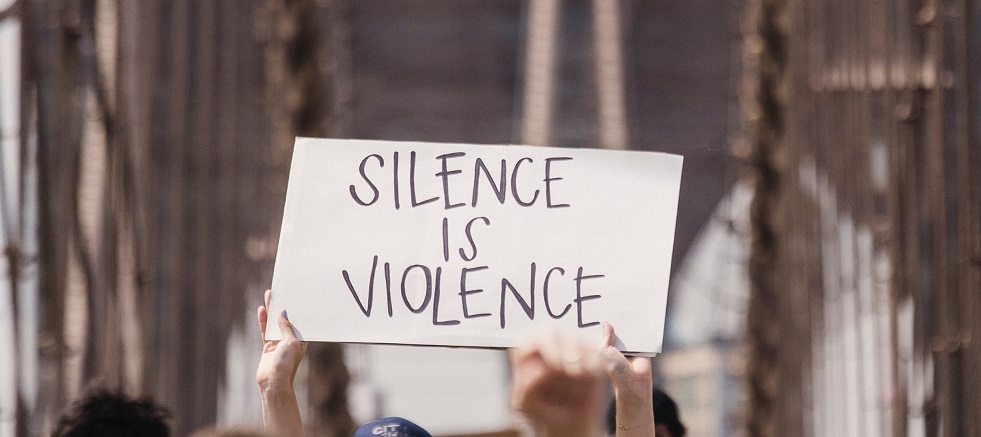
When leaders try to silence criticism, it raises concerns about whether citizens are truly free to express themselves. Free speech should not only apply to popular opinions. It should also protect voices that challenge government policies and encourage public discussion.

Free expression helps create informed citizens. People should be able to listen to different viewpoints, ask questions, and reach their own conclusions without fear of being silenced.

I believe hearing different sides of an issue is especially important when the stakes are high. Decisions involving war can impact entire countries, families, and future generations. If only one perspective is allowed into the conversation, people lose the opportunity to fully understand what is happening.

Reading News Online Man Using Laptop to View Digital Newspaper and Stay  Informed 70627689 Stock Photo at Vecteezy

Today, people do not have to rely only on major news organizations to share their thoughts. Independent websites and publications give individuals another outlet to discuss political issues and war-related topics. These platforms allow opinions that may not receive attention from mainstream sources.

At the same time, many of these websites remain unfamiliar to the general public. Before learning about anti-war publications, I had never heard of some of them myself. That shows how easily alternative viewpoints can be overshadowed by larger and more established media outlets.

The more I think about it, the more I wonder: if freedom of speech is considered such a fundamental right, why does it seem to face the greatest challenges during times of war?

Tuesday, September 22, 2026

The Cloud: And It's Impact on Communication


The cloud connects our digital world, making information accessible anytime, anywhere.

When I first heard the term “the cloud,” I assumed it was something only people in technology careers needed to understand. The funny thing is, most of us use it every day without even realizing it.

If you’ve ever saved a file to Google Drive, backed up photos to iCloud, streamed a movie on Netflix, or worked on a shared document for a class project, you’ve used cloud computing.

John McCarthy
The idea behind the cloud has actually been around for much longer than most people think. In the 1960s, computer scientist John McCarthy imagined a future where people could access computing power the same way they access electricity. Instead of owning expensive computers and equipment, they would simply use what they needed when they needed it. 

Back then, computers were huge, expensive, and only available to large organizations. Most people could not have imagined having access to the kind of technology we carry around in our pockets today.

As the internet grew and technology became more advanced, that idea slowly became a reality. A major turning point came in 2006, when Amazon Web Services introduced cloud services that let people and businesses store data and access computing power online instead of maintaining their own servers. 

Today, cloud computing is woven into almost everything we do online. It has changed the way we work, learn, communicate, and even entertain ourselves.

One of the biggest changes has been in communication and collaboration. Think about how group projects work now compared to even a decade ago. Instead of emailing different versions of the same document back and forth, everyone can work on one file at the same time.

As a college student, I honestly can't imagine doing group assignments without cloud-based tools. Being able to leave comments, make edits, and see updates in real time makes collaboration so much easier, especially when everyone has different schedules.

The cloud has also made remote work and online learning possible on a much larger scale. People can attend meetings, access important files, and communicate with others from virtually anywhere with an internet connection.

While the cloud has created a lot of convenience, it has also introduced some concerns that are hard to ignore.

Terms & Conditions

The first is privacy. Every photo, document, email, and file we upload is stored on servers owned by large technology companies. Most of us click "accept" on terms and conditions without thinking twice about where our data is going or who has access to it.


Security is another concern. Companies spend billions of dollars protecting their systems, but data breaches still happen. When a company storing millions of users' information gets hacked, the consequences can affect people all over the world. 

There is also the issue of how much information companies collect about us. Many cloud-based services track our habits, interests, and online activity. In exchange, we get personalized recommendations and a more convenient experience, but it raises an important question: how much personal information are we willing to share for that convenience? 

Internet Crash
Another downside is how dependent we have become on technology. When the internet goes down, everything seems to stop. We lose access to assignments, documents, communication tools, and sometimes even the services we rely on every day. 

The cloud has completely changed the way we live and communicate. It makes collaboration easier, information more accessible, and technology more convenient than ever before.

At the same time, it forces us to think about privacy, security, and who controls our information. As cloud technology continues to grow, those conversations will only become more important. For something most of us never think about, the cloud has had a huge impact on our daily lives.

AI Disclosure: This post was a collaboration using Microsoft Copilot. I asked Copilot to find research on the history of "The Cloud" along with the impact it has on communication. I then prompted it to take this research and turn it into a blog post, using prompts such as "write the blog post in heavy academic prose, but instead in professional writing."  I asked Copilot to help shape the text into a blog format, and I added links to related resources, along with appropriate images and captions.


Monday, September 21, 2026

Privacy Issues and Surveillance Ethics


Our digital footprints are always being tracked. 

Before watching these videos, I knew privacy was becoming a bigger issue, but I didn't realize how much information about our lives is collected every day. 

What surprised me most was learning that surveillance is not just focused on people who have committed crimes. Technologies like automatic license plate readers collect information on everyone, creating records of where people have been and storing that data even if they have done nothing wrong. The example of a man being photographed with his two daughters in his own driveway really stuck with me because it showed how even ordinary moments can end up in a database.

Students on Social Media


These issues affect me because, like most college students, I use technology constantly. My phone is always with me; I use social media every day, and I rarely stop to think about how much information I am sharing. The videos made me realize that my friends and family are in the same position. 

We leave digital footprints wherever we go, whether it is through our phones, online accounts, or social media posts. It is honestly a little unsettling to think that information about where we go, who we spend time with, and what we do online could be collected and stored without us even realizing it.

Facebook

The section about Facebook was especially eye-opening. I was surprised to learn about data mining, digital dossiers, and behavioral marketing. The idea that companies can combine small pieces of information to create detailed profiles of people is concerning. Learning about facial recognition and "electronic tattoos" was probably the most alarming part because it suggests that our digital footprints may outlive us. 

I think the government should place stricter limits on how long data can be stored and create more oversight over surveillance programs. At the same time, we need to be more careful about what we share online. These videos made me realize that privacy is much more fragile than I once thought, and once information becomes digital, getting that privacy back may be impossible.

AI Disclaimer: The post was a collaboration using Microsoft Copilot. I emphasized my own reactions and opinions while watching a video on privacy and surveillance. I then asked Copilot to help me shape the text into a blog post format. After reviewing the text, I added links to related resources and appropriate images and captions. 

Monday, September 7, 2026

Eight Values of Free Expression: My Favorite

The First Amendment protects our freedom to express our thoughts, opinions, and ideas.

Of the eight values of free expression, my two favorites are Individual Self-Fulfillmentand Promote Innovation. These values stand out to me because they reflect beliefs that are important to me personally and professionally. As someone who is interested in pursuing a career in law, I believe that freedom of expression is one of the most important rights people have. I also believe that diversity of thought and experience helps society grow and improve. Together, these two values show how free expression benefits both individuals and society as a whole.

My favorite value is Individual Self-Fulfillment, sometimes called self-actualization. This value argues that free speech allows people to express themselves, develop their identities, and exercise their autonomy. I strongly agree with this idea because every person deserves the opportunity to share their thoughts, beliefs, and experiences. Free expression is a fundamental part of human dignity. When people can speak freely, they can discover who they are, stand up for what they believe in, and connect with others who share similar values. Without this freedom, people may feel pressured to hide parts of themselves or remain silent about issues that matter to them. 

Woman Protesting for First Amendment Rights 
This value is especially meaningful to me because of my interest in law. One of the main purposes of the legal system is protecting individual rights and freedoms. As I explore careers in the legal field, I have become more aware of the importance of ensuring that every person has a voice. 

Whether someone is advocating for themselves in court, speaking about injustice, or simply expressing an opinion, they should have the right to be heard. I believe free expression empowers individuals and allows them to participate fully in society. It also encourages personal growth because people learn from sharing their ideas and listening to the ideas of others. 

For me, protecting the right to express oneself is about respecting people as individuals and recognizing their worth. 

My second favorite value is Promote Innovation. I am a strong advocate for diversity and inclusion, and I believe they are major reasons why societies continue to grow and improve. This value suggests that communities that protect free expression tend to be more creative, energetic, and innovative. I completely agree with this idea because innovation often comes from people who think differently or approach problems from unique perspectives. 

Diversity is about much more than differences in background. It also includes differences in experiences, viewpoints, cultures, and ideas. When people feel comfortable expressing themselves freely, they contribute perspectives that others may not have considered. These different viewpoints can inspire new solutions, challenge outdated assumptions, and encourage progress. Whether in law, business, technology, or education, some of the greatest advancements happen when people are free to share their ideas without fear of being silenced. 

I also think inclusion is essential to innovation because people are more likely to contribute when they feel valued and respected. When a society welcomes different perspectives, it creates opportunities for collaboration and creativity. New ideas emerge when people with different life experiences come together and learn from one another. In my opinion, this is what keeps society moving forward and helps solve complex problems. 

Overall, Individual Self-Fulfillment and Promoting Innovation are my favorite values of free expression because they emphasize both personal freedom and social progress. Individual Self-Fulfillment protects each person's right to be themselves and to have a voice, while Promoting Innovation highlights the benefits of embracing diverse perspectives. Together, these values create a society where people are free to grow, contribute, and make the world a better place. 

Thursday, August 27, 2026

Supreme Court Reflection


The Supreme Court is made up of nine Justices who interpret the Constitution.

Before watching this documentary, I mostly thought of the Supreme Court as a place where major legal battles end. What stood out to me was how much the Court depends on public trust, not just legal authority.

The process starts long before a case reaches the courtroom.

Thousands of petitions are submitted every year, but only a small number are accepted. The justices review those petitions privately and focus on legal questions, not disputes about facts.

I was surprised by how few people have actually served on the Court. Only about 100 justices have held the position in American history, and many stay on the bench long after the presidents who appointed them have left office.

John Marshall
The documentary also spent significant time on the Court’s history.

John Marshall’s leadership and Marbury v. Madison established judicial review, giving the Court the power to strike down acts of Congress. At the same time, the film did not avoid discussing mistakes such as the Dred Scott decision, which it described as a self-inflicted wound that was eventually addressed through the Civil War and constitutional amendments. 

One of the most interesting parts was seeing how the justices work together.

Despite their disagreements, traditions such as shaking hands before conferences are meant to preserve respect and prevent personal grudges. The discussions themselves appear thoughtful and structured, with justices sometimes changing their positions after hearing colleagues’ arguments.

The documentary also challenged the idea that the Court is secretive.

According to the justices interviewed, the real explanation for decisions is found in the written opinions. Oral arguments are public, and the written opinions explain the reasoning that guides lower courts in future cases.

In the end, the central message was clear.

The Supreme Court has no army and no ability to enforce its decisions on its own. Its influence comes from people accepting its authority and believing in its role as an independent interpreter of the Constitution. As the documentary emphasized, the Court’s greatest power is the trust it has earned over generations.


AI Disclaimer: The post was a collaboration using Microsoft Copilot. I took detailed notes while watching a 20-minute video about the U.S. Supreme Court, in addition to the facts that I learned. I emphasized my own reactions and opinions while watching. I then asked Copilot to help me shape the text into a blog post format. After reviewing the text, I added links to related resources and appropriate images and captions. 

Wednesday, August 26, 2026

My Top 5 Sources of Information


My main source of current events, news, and other important information is TikTok. The platform helps me stay up to date on current trends while also allowing me to grow my brand as well as my portfolio as someone interested in the Social Media field. Now, as a Strategic Communications major, I understand how TikTok works and how it pushes out specific videos/content to show its viewers the videos they want to see. This helps me understand that my "news" is most of the time biased toward what I like or what I spend my time watching. With my interest in the legal field, I also find myself engaging with legal as well as political content, which has helped me stay informed about current events and issues related to the law.


Similar to TikTok, Instagram is a platform I use daily. This app allows me to stay more up to date on what my friends from home have been doing, while also giving me more opportunities to see different and sometimes less personalized perspectives on the news. Unlike TikTok, where the algorithm often pushes content based on what it thinks I will enjoy, Instagram requires me to actively search for news and information. This allows me to come across different points of view and create my own opinions. I also enjoy the way Instagram is formatted, especially the descriptions included with each post. When a news organization posts about a current event, the description will often provide a summary of the story and explain what is happening. As someone interested in law and Strategic Communications, I find this helpful because it allows me to quickly understand different perspectives on legal and current events. 


When it comes to ChatGPT, my use of the platform is a little different. There is no algorithm constantly pushing out posts or information that it thinks I will like. However, ChatGPT is still an artificial intelligence tool that has been programmed to provide information based on the data and sources it has access to. When it comes to learning about current events and issues happening in our country, I use ChatGPT as a tool to help me find the facts and understand different perspectives. I think "unbiased" is a tricky word to use when discussing almost anything in today's world, but I feel that, with the right amount of digging and research, ChatGPT can do a good job of helping me stay up to date with current events.


 Next is my mom. My mom and I have very similar interests when it comes to current events and the world around us, although our interests differ in some ways. She is more interested in the corporate and business side of America, while I am more interested in politics and law. Since retiring, my mom has had more time to research topics related to her values and beliefs, especially when it comes to the news and information presented to the public by the government and media. Being able to have conversations with her and hear a different perspective on current events is something I truly value. I appreciate that we can discuss different viewpoints and challenge each other's ideas, which has helped me become more open-minded when it comes to looking at different types of "news."


Lastly, my favorite podcast is called Unbiased Politics with Jordan Berman. Jordan discusses current political issues and events while presenting different perspectives and encouraging listeners to look beyond political biases. I really appreciate her message and what she promotes because I believe it is important, especially for my generation, to take the time to understand the news from multiple points of view. As someone interested in law and politics, I think hearing both sides of an issue is especially important because it allows me to form my own opinions based on the information rather than simply accepting one perspective.